

Tiny Tornados: Why Your Child Might Be Melting Down (and what you can do)
Ah, tantrums—the dramatic monologues of childhood. One moment, you're offering a circle bell for some joyful instrument play; the next, you're caught in a full-blown, tear-filled performance over jingling too much or grabbing the wrong color bell.
If you’ve ever found yourself negotiating with a pint-sized tornado, you’re not alone. In this post, we’ll dive into the wild world of tantrums: why they happen,
what your child is really trying to say (spoiler: it’s not just “no!”), and how to keep your cool when things go sideways.

Why Tantrums Happen
Big emotions can be tricky to interpret—here are a few reasons your child might be melting down.
Baby Tears (0–1 years)
Unmet basic needs (hungry, tired, wet)
Overstimulated by noise, light, or movement
Underdeveloped self-soothing skills can make it harder for them to calm on their own
Toddler Tantrums (1–3 years)
Limited language skills to tell you what they need
Testing the boundaries and expressing frustration with limits set by adults
Preschooler Tantrums (3–5 years)
Using emerging language skills, but still learning to regulate emotions
Trying to gain control over their choices (clothing, food, etc.)
Struggling with transitions due to limited understanding of time or unexpected change
Hearing “no” can trigger big reactions, as preschoolers thrive on immediate gratification
How We Help at Tuneful Journey
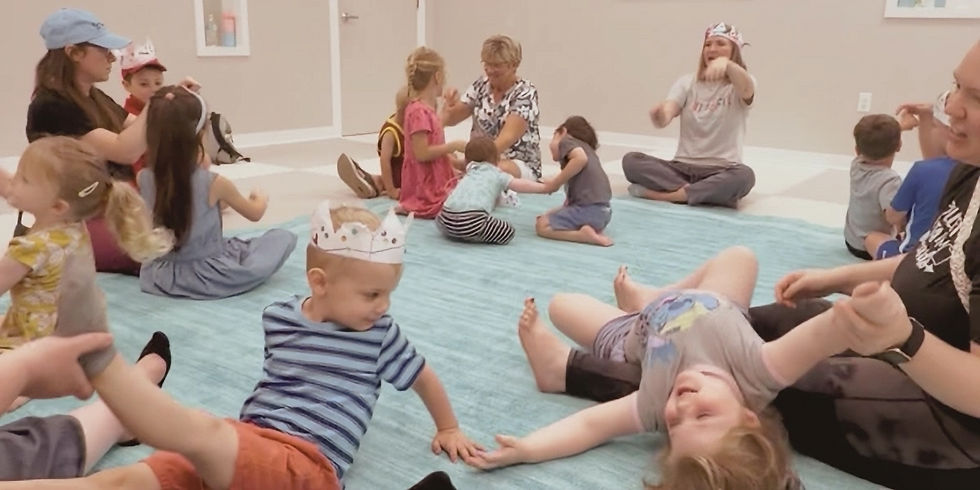
Our classes offer both natural and planned opportunities to practice key social-emotional skills. Here are a few ways we support emotional growth:
10+ transitions in and out of activities (each class)
Grown-ups label and discuss what their children’s bodies and instruments are doing
Group songs and circle dances encourage teamwork
What we encourage when big feelings show up in class:
Label and validate their emotion
“I see you are feeling sad.”
Model Belly Breathing
Take slow, deep breaths—belly should grow with each inhale.
Stay consistent with boundaries:
Follow through with what was said
Avoid changing the rule just to stop a tantrum (even if it’s tempting!)
Respond calmly and predictably so your child feels safe, even in hard moments
When Staying in the Classroom Doesn't Work
Take slow, deep breaths—belly should grow with each inhale.
Stay consistent with boundaries:
Follow through with what was said
Avoid changing the rule just to stop a tantrum (even if it’s tempting!)
Respond calmly and predictably so your child feels safe, even in hard moments
Creating a Calm Corner at Home
Want to try this at home? Here’s how to set up your own calm space.
Choose a Spot for Your Calm Corner:
Look for a quiet, low-traffic area with minimal distractions.
Decorate & Stock Your Calm Corner:
Soft rug or mat
Emotions chart (draw one with your child or find a free printable one online)
A shape to trace with finger while breathing (star, rainbow, hand)
Basket with calming items (Dollar Tree is a great place to look!):
Sand timer
Squishy or stretchy tactile items
Stuffed animal
Books
Small whiteboard and marker
Why It’s Worth Practicing Emotional Regulation
Helping your child learn how to manage their emotions isn’t just helpful in the moment — it’s a huge part of their long-term growth:
Builds stronger relationships by helping children express their needs and emotions
Supports mental health and emotional resilience
Encourages independence and confidence in handling difficult situations
🎶 Ready to help your child's social-emotional skills hit all the right notes? 🎶
Join us for a class to gain consistent practice—and leave with fresh ideas and inspiration!

Tuneful Journey, Owner & Educator
(515) 451-7787