

How Singing to Your Baby Supports Brain Development and bonding
The pressure to do everything “right” as a new parent can feel intense. Suddenly your brain is running a nonstop list of questions: Which sleep sack is best? Is it too soon for a pacifier? Is it normal to have this many blowouts in one day?
These questions are completely normal, but that doesn’t make them any less overwhelming when you’re exhausted and the days feel unpredictable.
Here’s the good news: there is one thing you don’t have to research, compare, or overthink.
Sing to your baby.
It’s simple. It’s free. And it is incredibly powerful. The benefits of singing to your baby begin sooner than you might think.

Why Singing to Your Baby Matters
When music is present, the brain doesn’t just hear it. It lights up. Areas responsible for language, movement, emotion, memory, and pattern recognition begin working together. Music is one of the few experiences that engages so much of the brain at the same time.
And your baby experiences your voice as music.
The rhythm, the rise and fall of pitch, the pauses, and the repetition all stimulate developing neural pathways. When you sing, you are strengthening the foundation for language, emotional connection, and learning in one beautiful, shared moment.
Why Your Voice Matters Most
Hearing is the first sense to fully develop. Long before your baby sees your face, they are already listening to you. By the third trimester of pregnancy, babies can recognize familiar voices and rhythms.
But babies don’t just hear words, they hear melody.
That sing-song way you instinctively talk to your baby? It’s powerful. Researchers call it parentese, and it helps babies tune in to language. The exaggerated pitch and rhythm capture attention and make patterns easier to process.
When your baby kicks in utero, settles when you speak, or turns toward your voice after birth, it isn’t random. Their brain is wiring itself through sound.
And live voice matters most. Your baby responds more deeply to the warmth and back-and-forth of you than to any recording. When you pause and they coo back, that tiny exchange is building communication skills in real time. It’s also strengthening the bond you’re building with your baby.
From the very beginning, development is shaped by what a baby hears most often.
And what they hear most is you.
Your voice isn’t just comforting.
It’s organizing their brain. It’s laying the groundwork for language. It’s their first music.
How Your Baby’s Brain Responds to Your Voice
When your baby hears your voice, it does not simply stop at their ears. Sound travels through the auditory system and connects with other areas of the brain, including those responsible for movement, touch, emotion, and balance.
This is where sensory integration begins. In simple terms, sensory integration is how the brain organizes and makes sense of the world (and all those sensations).
When you sing while gently rocking, bouncing, or swaying, your baby pairs sound with movement. When they watch your facial expressions as you sing, they connect sound with visual cues. When they feel your chest vibrate during a lullaby, they link sound with touch.
Over time, your voice becomes the anchor that ties these experiences together, helping the brain build coordinated, well-connected pathways.
Even a few moments of singing together each day can make a lasting impact.
How to Use Your Voice Before and After Birth
The good news is that this does not require a perfect voice or a music degree. It simply requires you as you are.
before birth
During pregnancy, your baby is already listening. Choosing one simple lullaby or hymn and singing it consistently allows the melody and rhythm to become familiar. You might sing it while folding clothes, driving to appointments, or winding down for the evening.
After Birth
That same song can become a powerful calming tool because your baby already knows it.
Once your newborn arrives, keep it simple and woven into daily routines:
Sing during diaper changes.
Create a short “good morning” song.
Use the same lullaby before naps and bedtime.
Gently bounce or sway while singing to pair sound with movement.
Repetition is powerful. The same song, sung consistently, builds predictability. Predictability builds security. And security supports a brain that is ready to learn.
Presence Over Perfection
Perfection is not required. What matters is your presence and intention. Your voice, exactly as it is, is enough. Simply sing to your baby whenever and however it feels natural for you.
Small, repeated moments of song become anchors for your baby’s developing brain, weaving together sound, movement, touch, and connection in ways that last well beyond the newborn stage.
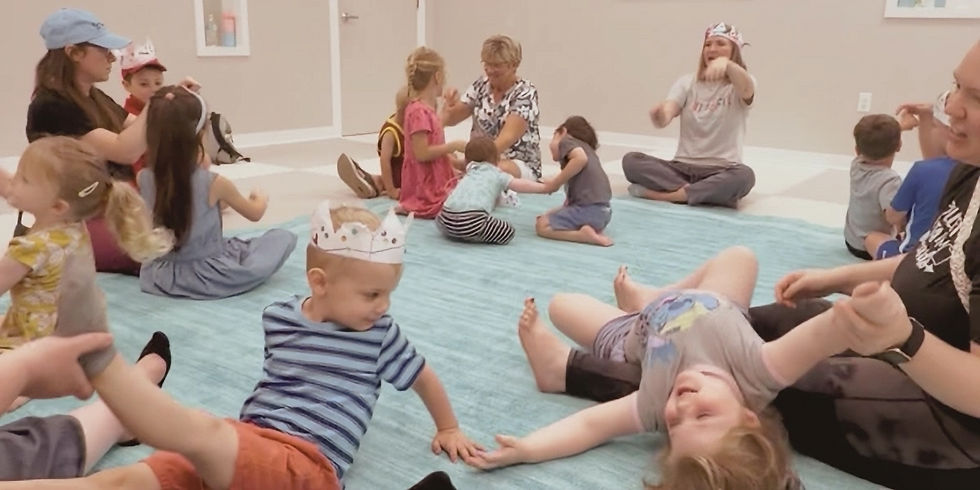
If you would like guidance — and a community of other parents navigating the same early questions — our classes are designed to help you build simple, musical routines with confidence.
We would love to welcome you to a free preview class at Tuneful Journey, where music and movement grow little hearts and minds.
A Note on Research
If you’d like to explore more about how music activates and strengthens the developing brain, we recommend the work of music researcher and educator Dr. Anita Collins. Her research offers meaningful insight into the connection between music and brain development.
We had the opportunity to learn from Dr. Collins during a workshop in July 2025, and her work continues to affirm the importance of early music experiences for the families we serve.
Have questions about your child's musical journey?
We’d love to help you explore next steps and see what might be a good fit for your family.

Tuneful Journey, Owner & Educator
(515) 451-7787