


Three Things We Wish Every Parent Knew About Tuneful Journey Music Classes
Behind-the-Scenes Insights from Our Teachers
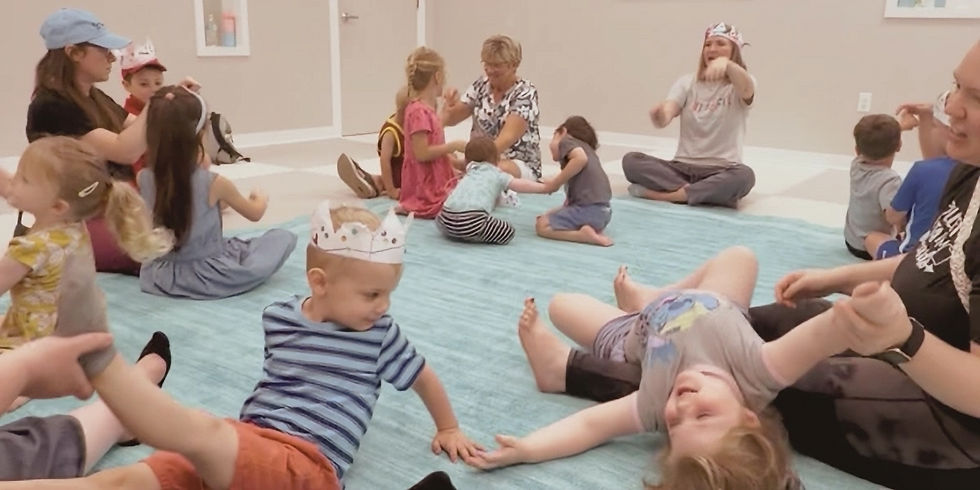
Every week at Tuneful Journey, our Kindermusik and group piano classrooms are filled with singing, movement, laughter, instrument exploration, stories, and playful learning. While families naturally remember the fun and excitement, our teachers are often seeing something deeper than what first meets the eye.
As parents, it's natural to look for the big milestones:
"Did my child follow the directions for the activity?"
"Did they play the instrument in the correct way?"
"Did they join in during the circle dance?"
Those moments matter. But the moments that excite us most are often the ones building the skills children will carry far beyond our classrooms—resilience, confidence, creativity, connection, and a lifelong love of learning.
Here are three things we wish every parent knew about Tuneful Journey music classes.
#1. Ms. Brooke: A successful activity doesn't always look perfectly happy.
Sometimes the biggest learning happens not during the exciting moments, but in the simple, predictable routines we repeat week after week.
One of my favorite examples happens every semester during our specialty instrument turns. The first time we introduce turn-taking, there are often tears because waiting is hard. Little hands run to touch the drum, and are disappointed when they have to wait. Others aren't ready to give up their turn and send it to the next friend.
As adults, we might think, "This activity isn't going very well." or “My child is awful at sharing.” It’s also totally natural for parents to want to rush in and take away the discomfort.
But as educators, we see an amazing opportunity. Week after week, as the same routine unfolds, each child begins to find comfort in the natural flow of their turn (exploring, adults singing and tapping along with their playing, and the cue to stop).
They are practicing waiting, and their adult is practicing supporting them when it feels hard. They begin to trust that another turn is coming.
By the end of the semester, it's remarkable to see those same children are calmly waiting their turn. There are fewer tears, and many more smiles. They know what to expect, they understand the routine, and they are learning that someone else’s success doesn’t take away from their own!
Through this routine, children are learning to work through manageable discomfort in a safe, supportive environment. Those small moments lay the foundation for resilience and healthy coping skills that research suggests can serve them well into adulthood.
Parents often remember the excitement of finally getting a turn, and the pride that comes along with their child’s bravery in playing in front of others. We notice the growth that happened while they were waiting.
#2. Ms. Wendy: Parents and caregivers are the most important teachers in the room.
When families first come to class, many parents naturally assume that the goal is for their child to watch the teacher, listen to the teacher, and follow directions.
Surprisingly, that's not actually the most important part of class.
One of the beautiful things about Kindermusik is that the teaching doesn't flow only from teacher to child. Instead, it looks more like this:
Teacher → Grownup → Child
Our role is to guide you just as much as we guide your child. As we sing, move, play, dance, and explore instruments together, we're modeling ways to support your child's learning. We hope you'll jump right in–lead the pretend play, dance alongside them, wonder aloud about what they're discovering, and explore instruments together.
One of my favorite moments is watching a parent offer a creative idea for using an instrument or prop, only to see their child's face light up as they excitedly give it a try. Those shared moments of discovery are where so much learning—and connection—takes place.
That's the kind of participation we hope to inspire in every class. It's a wonderful example of something called scaffolding—meeting your child where they are and gently extending their play. Maybe they're tapping a drum softly. You might say, "You're making quiet sounds," tap along with them, and then add, "I wonder if we can make loud sounds now!" Those simple interactions help children feel seen, understood, and confident enough to try something new.
Of course, there are times when children will listen directly to their teacher—during a story, an instrument demonstration, or when we're introducing a new activity. Those moments are important, too. But the heart of our classes isn't for your child to build the strongest connection with us. It's for them to build an even stronger connection with you.
That doesn't change as children get older. In our Level 3 and Level 4 classes, our teachers naturally take more of the lead, but your participation still matters. During Sharing Time, we hope you'll sing, do the motions, answer the questions, and even be a little goofy. Your child will notice, and it encourages them more than you might realize.
Our hope is that those moments don't stop when class ends. Maybe a song pops into your head in the car, you use one of our movement games while waiting at a restaurant, or you remember a pretend play idea on a rainy afternoon. Those are the moments that matter.
So if you've ever worried that you don't sing well enough, don't know all the motions, or feel a little silly joining in, please don't.
Your child isn't looking for a perfect performance–they're looking for you.
The more you participate, the more they'll want to as well, and together you'll create memories and connections that last long after music class ends.
#3. Ms. Angi: Practice is about consistency and connection, not just correction.
One of the things that makes our group piano program unique is that the grownup attends class as a coach. You're not there just to watch—you're learning right alongside your child. By paying attention during class, participating in the activities, and even jotting down a few notes, you'll leave knowing exactly what your child is learning and how you can support them throughout the week.
The students who make the greatest progress are the ones who spend a few enjoyable minutes at the piano several times throughout the week. One of my favorite moments is when a child can hardly wait for their turn at the piano because they're so excited to show off what they practiced that week. That kind of confidence grows from small, consistent moments of making music together at home.
One thing I especially hope parents know is that practice doesn't have to mean playing the assigned musical idea we learned in class over and over until it's "right." Once your child can play it, have fun with it! Play it high or low, fast or slow. Make up a new ending. Pretend it sounds like an elephant...or a mouse. Ask your child to teach you or a sibling how to play one of the musical ideas we learned in class.
Those playful moments do more than make practice enjoyable—they help children become creative, confident musicians.
They're learning to experiment, improvise, and express themselves through music instead of simply checking off a practice box.
So instead of sending your child off to "go practice," spend a few minutes making music together. Sit beside them. Celebrate what they've learned and try it with them. Explore alongside them. Those shared moments build confidence, strengthen your connection, and help your child see the piano as a place of creativity, discovery, and joy.
The Learning You Can't Always See
What Children Gain from Tuneful Journey Music Classes
One of the greatest privileges of being a teacher at Tuneful Journey is getting a front-row seat to growth that unfolds over weeks, months, and sometimes years. We see the child who once clung to a parent's leg eventually move and play with confidence. We see the child who cried while waiting for a turn begin encouraging a friend. We see families discover that the most meaningful learning often happens in the moments where they simply enjoy making music together.
So if you ever leave class wondering, "Did my child benefit from class today?" we hope the answer feels a little different now.
Learning isn't measured only by the songs children can sing, the rhythms they can play, or the directions they can follow. It's also found in growing confidence, deeper connections, resilience through challenges, and the quiet belief that, "I can do hard things."
Those are the moments we're celebrating every week, and we're so grateful we get to share them with your family.

Tuneful Journey, Owner & Educator
(515) 451-7787


